Tuesday, July 17, 2012

Futureproofing Vancouver: Take5/Ace Decade


Though a lot of the artists I’ve highlighted on Futureproofing so far might be relatively unknown outside of Vancouver, not all of them are necessarily newcomers; some have been active for the better part of a decade. But Mikëal Frazer is an exception even to that; musically active since the mid-90s, he's an unsung staple of the city, having been involved in the late nineties club scene just as things were starting to take form as we recognize them today. I'll leave the history lesson to Frazer's enlightening interview below, but suffice it to say he's been a DJ and producer extraordinaire in the realms of hip-hop and more recently, dub and "bass music." He's been operating under the name Ace Decade for the latter material, but Take 5 is the name the community knows him by.

Thursday, June 21, 2012

Futureproofing Calgary: Dan Solo


Over the past year, the Futureproofing blog seems to have shifted from a personal outlet for my ramblings and showcases from some of my favourite artists (Peverelist, Kevin McPhee) to something more centred around my local scene here in Vancouver, with the Futureproofing Vancouver concept becoming far more comprehensive than I ever expected, and whether or not it was planned, I can't say I'm not proud of the shape everything has taken. While mulling over who to spotlight next (I'm still waiting on you, Mr. Michael Red), I received a promo from a Calgary-based label (Crude Records) whom had previous released some of my favourite Vancouver artists, this time featuring Dan Solo, a producer I had already been acquainted with through both hearing his name thrown around and through his semi-ambient Sanctums project with fellow Calgarian Evangelos Typist, which caught my ear earlier in the year.

Friday, March 30, 2012

Futureproofing Vancouver: Daega Sound


Vancouver likes its dubstep, or at least it used to—it’s hard to tell these days. Since the advent of (and thanks to the hard work from) the city’s LiGHTA! crew, this duo of brothers (Ben and Josh) has been pushing a smart and sleek dubstep sound a little bit removed from some of the more obviously dubwise and reggae-influenced music of the other members. That’s not to say they lack anything, but you can tell the roots of Daega Sound come from a history of techno and garage as much as the other touchstones, more concerned with percussive agility than heft and wobbles, more preoccupied with buffed chrome textures than ruffnecked aggression.
The first time I saw them play (a set heavy on their own material), I was struck by how... tribal it sounded. Not in a shitty tribal tech house way (obviously), and not in a pseudo-spiritual Digital Mystikz sort of way either. Instead, they carried this iridescent throb meted out in dollops of synth and staccato drumbeats that seemed to stack their weight on top of each other so each bar ended with a real bang, only accentuated by the sexy sharp swing most of their productions incorporate. There was something about the chords and pads they used—sensually pulsating, soft-focus blobs—that held an allegiance to the sort of half-awake twilight reveries you’d find on the best Chain Reaction releases, and a powerful yet not overtly masculine sense of physical pressure that reminded me a lot of Scuba. Mid-period Scuba is not a bad reference point here, and Daega’s sound takes all the good parts of the Mutual Antipathy era and places Paul Rose’s clinical steel into a warm bath of reverb and bleary early dawn melody.
Daega are an example of a Vancouver duo making it past that seemingly impermeable Rocky Mountains barrier, notably playing Pinch's well-loved Dubloaded night in Bristol (I was there—it was great, and amazing to see two local guys play with Pearson Sound at a night curated by Pinch). The mix they’ve done for me here is a short but near-perfect display of their own wares: oscillating smears of sanguine warmth, drums that click and clack with accidental precision, and melodies that course in spurts through the cold metal framework like antifreeze. Loaded with dubs, it showcases their recent six-track EP release on Scottish label Echodub, as well as their forthcoming single on Seattle's Car Crash Set.


FUTUREPROOFING VANCOUVER: DAEGA SOUND

Daega Sound - Let It All Go - Echodub
Daega Sound - Winter's Horse - Forthcoming Car Crash Set
Daega Sound - Whirlpool - Dub
Daega Sound - Legion - Forthcoming Car Crash Set
Daega Sound - Bug In The Rug - Echodub
Daega Sound - Mole Man - Echodub
Daega Sound - Construct - Dub
Daega Sound - Fonica - Dub
Daega Sound - The Ridge - Dub
Daega Sound - Unspoken - Dub
Daega Sound - Stranded - Echodub


RYCE: How long have you guys been making music for, and how has it changed over time?

DAEGA: We have been involved in music since we were about 5 years old. Classical as we grew up, then branched out into experimental bands.It was in our late teens that were exposed to electronic music—Ben immediately bought turntables and we began DJing. We’ve been making music as Daega Sound for a little over 4 years. Most of the change has happened in the production arena. We have been learning how to write and mix over the years and the quality evolves and gets better whereas the vibe with our sound is very congruent over the years. We are both intrigued and driven by the same vibey deep rolling beats and bass that we were when we began writing.

Have you always been based in Vancouver?

We grew up in a small city a few hours north of Toronto. We spent some time in Victoria as well as living in Toronto and Guelph, Ontario, where we promoted as Balance Productions and performed as DJ Sela (Ben) and Deep Six (Josh). The west coast was calling us though and we returned to Vancouver where we we're based for about 7 years before shifting the headquarters a short ferry ride from Vancouver to the Sunshine Coast.

When did things start picking up for you, and when was the first time you played outside of Vancouver, and where was it?

Things have been steadily gaining momentum since our first release in ‘08. Slowly at first, yet each year seems to bring new opportunities so we can make ground. Summer performances at West Coast Canadian festivals Shambhala, Soundwave, Bass Coast and New Forms Festival have definitely helped to introduce us to new listeners which has undoubtedly brought more opportunities. Last year we played Live at MUTEK and in the UK for the first time at Pinch’s night Dubloaded in Bristol. Our 6 track Ep that we put out with Echodub out of the UK late 2011 has also aided in bringing our sound out the world with support from some notable UK DJ's/Producers such as Loxy, Appleblim, Chef, Om Unit and more. Though there were many shows outside of Vancouver before we were Daega Sound, as Daega our first show outside of the city would have been live in Victoria at the Jungle Room shortly before our first performance at Soundwave on Vancouver Island.

Has Vancouver been a nurturing home for your music and your careers? How often do you play gigs?

Vancouver has been a good place for us to build up: solid people, productions, and scene. Most of our gigs as Daega Sound have been in Vancouver, though now we play less in shows Vancouver and more outside the city. We probably play 2 a month on average, with some busier times and some quieter times depending on the time of the year.

You guys are still making dubstep at a time when a lot of people are moving away from it; do you feel like the genre/format is still important, that there are still things left to be said?

It's all about the sound. We didn't get into dubstep because it was popular, but because we found a sound that encompassed everything we loved about drum & bass, techno, deep house and 2step/garage and rolled it all into one. The tempo just works for it. Its at a funny time in its evolution—paradoxical, right now there is less “dubstep” being made at a time when there is whole heck of a lot of dubstep is being made. In our view, what we produce and feel doesn't really have to do with something being left to be said, rather we feel the sound is still very relevant and has by no means become passé for us. The original sound, the “space, pace and bass” has always been and always will be the message - if you're looking for a message. A number of producers that were producing “dubstep” when we got into the sound have indeed shifted the focus of their current production's. This is always good for the evolution of a sound and a scene in general, but, an important point to remember is that this shift in productions doesn't nessecarily reflect the interest in the sound from the dancefloor. Is the genre/format still important? No less and no more than it ever has been. When it comes to the dancefloor or to the headphones, its our belief that peeps will always feel “space, pace and bass.”

How do you feel about the sort of mainstream explosion in popularity of dubstep, and the kind of stuff that is popular?

Popularity trends follow the same line, and there's not much you can do about it. A lot of factors go into making something popular... perhaps too many to discuss in this interview! We may have to raincheck on this one...

When you guys play a set, for example, what are some recent dubstep artists/labels that are still doing it for you? Even labels that used to release dubstep aren’t really releasing it anymore, outside of a choice few.

Kryptic Minds, Pinch, Benga, Distance. Tectonic, Chestplate... not to mention our own dubs/releases

Daega Sound is not purely a dubstep outfit, though, and I know that you guys are fans of lots of other stuff: any plans to branch out more with future releases?

We will always be putting out the deeper side of dubstep, but yes we are currently writing some heavy and deep drum & bass tunes. We are planning on releasing a bunch of these tunes over the next year on various labels. We've always written music at different tempos, just haven't put any of the tunes out yet. Expect to hear more in the 100-110 bpm range, techno, tech and deep house and downtempo in addition to the dnb.

What are your upcoming releases, and last year you started up Fathom—can you explain exactly what it is and what your plans are with it?

Coming out in 2012 so far:
Legion / Winter’s Horse on Car Crash Set
HsPtl WbBle - Mat the Alien (Daega Sound Remix) on Really Good
Daega Sound and Hxdb collab, two tracks 12” on Crude records
Whirlpool/Falsehood/Egore – 3 track EP on DPR Recordings
More to come... stay tuned!

Fathom Recordings is our grass roots record label. We press 12” vinyl and number and hand silkscreen the jackets in a limited edition format. The basic philosophy is simple: create an artifact in this digital, disposable and deletable age.

Why did you feel the need to start your own label? What do you think of the record label situation in Vancouver in general, is there a lack of good options or viable platforms?

Our starting our own label had nothing to do with a lack of good options or viable platforms but because we wanted our own label to express ourselves creatively on our own terms. We choose the music, the art, the schedule and the direction.

I saw you perform at Pinch’s night Dubloaded in Bristol; how’d you get in touch with him and have you played anywhere else outside of North America? How were you received in Bristol and elsewhere, did you find the audiences receptive?

We played a show with Pinch in Vancouver and he liked what we did there so we kept in touch. We were booked to play Mutek last year so we used that as a catalyst to set up a small tour in Canada and ended it at Dubloaded. It was a slow start to the night but it packed out quickly. It was a sweaty and awesome night and was an honour to be at Dubloaded and performing with DJG and Pearson Sound. We found the the audience receptive, open, well -ducated in the sound and full of energy – the feedback following the gig was very good. As far as performing outside of North America, UK and the States are the extent of our international gigs so far.

Can you talk a little bit about the mix? What’s in it, how’d you record it, etc.

The mix we did for you is a collection of forthcomings, releases and dubs. The first tune “Let It All Go” is out title track from our recent Echodub release. It's followed by some cuts from our upcoming release on Seattle's Car Crash Set imprint and some of our new unsigned dubs including the massive “Unspoken” and the deep and running cuts “The Ridge” and “Fonica”. This set was recorded live on the Sunshine Coast.

Saturday, March 3, 2012

Some words with Ben UFO

Chances are if you follow electronic music in any capacity -- and if you're reading this blog, I think that confirms it right there -- you've probably seen or heard about my feature on RA surrounding the collision of "bass music" and house, documenting the shift from dubstep to house, the DJs who mix everything together, and a new breed of producers who are operating in a nebulous middle ground. That middle category elicited one of the most interesting interviews I did for the piece, Ben UFO -- one of London's best and most revered DJs right now -- willing to engage on a critical and thoughtful level unusual for your regular old interview, especially a shorter one like this. I was intrigued by what Ben had to say and thought it worthy of publishing the entire unedited interview here, because for obvious space reasons the actual RA piece only included bits and bytes of our dialogue.

RYCE: How long has house music been on your radar for? Did it predate your interest in dubstep/'nuum music?

BEN: If you have even a vague interest in electronic music, or pop music for that matter, it has to be at least ‘on your radar’. How could it not be?

My listening habits when it came to electronic music weren’t exactly sophisticated when I was growing up, and I wasn’t into house music at all, but house records charted pretty regularly and you’d be exposed to them nonetheless.

I came to dubstep through a love for jungle and drum and bass which developed at school and during my first year at university. I was hugely nerdy about it, and started obsessing over digging back through the music I’d missed in the early-mid ‘90s, even at the expense of checking for new music. I did go to nights and tried to DJ where I could, but my experiences with that music were largely quite insular and detached.

When I first started hearing dubstep and started going to nights, what felt most exciting was that this was amazing sound system music that was being made now. There was a sense that anything could happen, and that there was all this territory left to explore. The openness of the producers involved and their willingness to look beyond the confines of their genre was essentially what led me to think about house music in a different way.

Did you feel like house was antithetical to the kind of scene you got yourself involved in when you started up the Hessle stuff? Did you feel any sort of barrier between house and what you guys were doing as dubstep-related/parented "bass music?"

We started the label in 2007, and whilst we had no ambition to be anything other than a good dubstep label, house music was impacting on the music in various different ways. One of the first times I saw D1 DJ, he opened with Bass Tone by Sole Fusion pitched up to 135bpm and mixed it straight into Left Leg Out by Mala; Basic Channel, Rhythm & Sound and Chain Reaction had a huge impact on a lot of the Bristol producers coming through at the time, and on me as a listener; and with regard to Hessle Audio we’ve been lucky enough to have had the support of Hard Wax and a lot of Berlin-based DJs almost since the inception of the label.

When did you start incorporating outright house into your own DJ sets? Was it difficult?

There was a noticeable shift in the music a couple of years later. A lot of DJs, producers and listeners became disenchanted with dubstep, which had already developed an established formula, and were starting to look for something new. House music was being played on the pirates again, but rather than looking to the US or Europe for their records, DJs were incorporating tunes made by kids in UK inner cities which had all the traditional characteristics of UK pirate radio music.

This wasn’t music being made with the dubstep scene in mind at all, but a lot of listeners latched onto it straight away. A few DJs started incorporating it into their sets, but fairly awkwardly at first. I remember seeing DJs play out and you’d hear 30 minutes of dark UK house and an abrupt pause, followed up by 30 minutes of dubstep and grime. I wanted to find ways to bridge the two tempos naturally, and whilst the music I play has continued to change and evolve, that’s essentially the style of DJing I’m still exploring three years later.

When did you start to notice a shift towards -- I'm only using this problematic word to differentiate it from that dark UK house you mentioned -- "actual"/'traditional" house in dubstep/dubstep-related sets? Do you feel that you were one of the first to do this?

To my mind this question misrepresents what was actually going on. I find the critical fixation with “UK Funky” as exclusively HCC-related music rather patronising, and the implicit suggestion that UK producers introduced syncopation to house music in 2009 (this is something I’ve had people tell me multiple times) is patently absurd. There is obviously a direct and vital connection, but if you scrutinise the selection of UK DJs when this music was emerging it becomes immediately apparent that a debt was owed to US-based producers as well. Tracks like ‘No Hook’ and ‘Soundbwoy’ by Kenny Dope, ‘I C U’ by Karizma and ‘Don’t Panic’ by DJ Gregory immediately spring to mind as staples of otherwise UK-focused DJs, to the extent that all these tunes were widely bootlegged and sold to an audience who were more familiar with the productions of people like D Malice (who actually remixed and bootlegged various house classics early in his career), Roska and Hard House Banton.

I don’t feel comfortable with this as a descriptor of the music I play but to use your term, I have perhaps shifted more towards “traditional” house music more than most, but this is as much to do with personal circumstance as anything else. I moved into a house with old friends a couple of years ago, both of whom are deeply immersed in house music in London.

A lot of dubstep/bass music champions -- and those who might have resisted or even would still resist house's encroaching influence -- might have said that "house" lacks the rudeness factor of UK music, of UK hardcore continuum music like jungle/dnb/dubstep. Do you feel the same? Did you find it difficult to reconcile and incorporate house music with the kind of music some more dubstep-hungry audiences would have been expecting? Were audiences receptive at first or was it an over-time thing?

That kind of attitude doesn’t allow for the enormous variety found within all of that music, UK or otherwise, and it’s a dichotomy I rejected a long time ago. If you’re after aggression and propulsive rhythmic energy listen to a few Steve Poindexter records or something - and on the flip side there’s plenty of jungle releases which display all the melodic delicacy and nuance of the most beautiful Chicago records.

A few years years ago, Nick Craddock (http://www.residentadvisor.net/dj/nickcraddock) linked me to these cassette rips of a Spencer Kincy set at a night in Chicago called Deep in the Flowers (http://www.5chicago.com/audio/spencer-kincy/live-at-deep-in-the-flowers.html) – hearing those for the first time completely changed my perspective on how house music was ‘supposed’ to be mixed. His mixing style almost couldn’t have any more in common with UK pirate radio DJing - hyperactive cutting, quick blends and spinbacks… I can’t overstate the impact hearing that set had on my DJing.

You say that set had a major impact on your DJing -- how did your DJing change and what's the difference, in sort of layman's terms, between mixing for a dubstep set and mixing a house set?

It didn’t change at all; it just reassured me that I could DJ naturally and that I didn’t need to emulate any particular style just in order to play the music I like.

When you started to try to bridge the gap between house and dubstep, did you find audiences to be resistant/turned off at all?

I did, for a while. Most people from our corner of the scene will have experienced heckling from people expecting dubstep… It’s to be expected though. Music moves so quickly and scenes will always need a bit of time to catch up. If anything it’s a huge privilege to be booked to play on such a diverse array of lineups – last year I’d find myself playing back-to-back sets with my heroes from the dubstep world one night and find myself playing alongside amazing house DJs the next. I hope that continues.

You said that a lot of people were looking for something new after becoming disenchanted with dubstep... do you think there's something reductive or misled by turning to an older form of music instead of creating something new?

HCC-related music in the UK has always mined older music for inspiration. I still see what’s happening now as a route towards creating innovative new music. Listening to older records and acknowledging their influence is just another way of looking for unexplored territory, and another way of creating an interesting context for the production of new music.

Do you see yourself as part of a house scene or still the experimental, underground, open-minded scene that once birthed dubstep?

Hopefully both.

http://twitter.com/benufo
http://www.hessleaudio.com/

Tuesday, February 21, 2012

Futureproofing Vancouver: Self Evident


I've said a lot of things here about a lot of DJs, but Self Evident -- Ben Ulis, brother of previously profiled Max -- is a name you're bound to see on a lot of fliers.  In a similar fashion to Taal Mala, he's a dance music encyclopedia, full of knowledge about obscure niche genres but still with one foot in the future at all times for that rare blend of archival expertise and up-to-the-minute freshness.  You can book him for pretty much any show and end up satisfied: he can play jungle, garage, dubstep, house, whatever you want, or he can just do all of those things at once.  It's reasons like that he's one of Vancouver's most ubiquitous and dependable DJs.

His production career is almost as prolific as DJ gigs; following his SoundCloud is a bit of dizzying affair in itself, and that's not to mention other projects like his brotherly collaboration Giant Molecules with Max. The mix he's given here -- no joke, one of [i]three[/i] he submitted in a four month period, the long gestation period of which is entirely my fault -- is composed of all originals, and shows off his current sound: clean, uncluttered, and absolutely devastating, it's all about minute percussive elements and massive, physical subs, attaching footwork-ready twitch to a bass-heavy house template not so far off from the recent goings-on in the UK.  The upbeat "Standing On The Corner" melts down into the sparse "More," all bent-girder basslines and rambling percussion, which quietly blooms into the dayglo R&B of "Treat Me Right" with its high-strung vocal and candyfloss synths.  The restraint and ease that he mixes these tracks together is a reflection of his confident DJing style, and even if this all-originals set doesn't quite illustrate what makes him so fiery behind the decks, it sheds much-needed light on his own output.  He can go from sparse rudeboy menace to orchestral-grime synth palpitations (check the transition from "Take A Knee" to the explosive "Light Up"), and he shows off his newest production side with the "emotional drum & bass" Shapeist tracks, featherweight (yet still muscly, in a wiry way) slices of dnb that tip-toe on seismically shifting sub.

The best way to be truly blown away by Ben is to see him DJ live -- and if you live in or near Vancouver, it's certainly not hard to find a gig he'll be playing -- but his mix here does a fine job of showing that his blending skills translate to production, tracks that don't really sound like anyone else but are completely measured, restrained, and deadly effective: not a moment or a sound is wasted, just pure, dubwise dancefloor pressure.

FUTUREPROOFING VANCOUVER: SELF EVIDENT

1. Self Evident - Standin On The Corner
2. Self Evident - More
3. Self Evident - Treat Me Right
4. Self Evident - Take A Knee
5. Self Evident - Light Up (Forthcoming Dipped Recordings)
6. Shapeist - Off
7. Shapeist - Obvious
8. Self Evident - Badboy


RYCE: How long have you been based in BC?


For about ten years.

What is it about Vancouver that you like, what is it that you don't like, and do you feel like it's the right home for you as a producer?


Vancouver has great food. I don't like the drivers. As far as a jumping off point for a producer it probably isn't the best place -- it isn't somewhere the rest of the world traditionally looks to for music. It is fiercely competitive though, because of all the talent here, which drives me to work harder.

What kind of music do you make -- e.g. how would you describe it ? Do you still think of yourself as a "dubstep" producer in a scene where many of the prominent DJs and producers are starting to make moves towards house or other styles?


I would say that my music is dynamic and eclectic. Hybrid music. I love rave music, world music, classical, metal, hip hop. Basically everything inspires me, and helps me shape what I do or don't like.

I've never thought of myself as a dubstep DJ. Or a dubstep producer. I have dabbled with dubstep. Generally, when I make dubstep speed music (70-140) I am taking more inspiration from crunk and grime music. The Dubforms parties were the most important thing to happen to dubstep in Vancouver, but I don't think any of the members of LiGHTA! consider themselves dubstep artists, just... artists.

Can you outline all of your musical projects? I know you have quite a few things going on right now.


Self Evident is my main one. Wepa is a project with Gameboy + Will Eede, and it derives a lot of inspiration from Latin and Indigenous music. Shapeist is my new alias for emotional drum & bass. Those are the main projects now. I also have ongoing collaborations with Max Ulis, HxdB, Cure, Ronin, MC Thinktank, and Crystal Precious.

You do a lot of collaborative work with other producers, like HxdB or your brother Max. What appeals to you about the collaborative process?


It can be very fruitful, two brains and two refined perspectives can get things done quicker and more decisively. Collaborations can be hard sometimes though, we all make music differently, and therefore we have to go a bit out of our comfort zone to see eye to eye. You need a healthy respect for each other.

Do you do any other musical projects in the city aside from making music and playing out? By the same token, you're one of the underground's most active local DJs; is DJing your dayjob, so to speak? Is that a sustainable living in Vancouver right now?


I am a promoter -- I do a monthly at the Astoria, plus a monthly art show at the Minotaur's Lair. I also design posters and flyers for shows. I am getting by, barely. I wouldn't recommend it. So many people think they are a DJ, so many people want to be a DJ, so many DJs want a piece of the pie.

As someone who used to be associated quite strongly with "dubstep," how do you feel about the "dubstep" scene in Vancouver has developed and where it's gone?


I have never stopped playing dancehall, grime, UK garage, rnb, hip-hop, jungle, and forward thinking dance music. Everyone in Lighta! is into all types of music. We play good music regardless of style.

Do you feel disconnected at all from the current goings-on with dubstep and the mainstream idea of what dubstep is? Is dubstep something you no longer wish to be associated with?


Yes and yes. But that doesn't mean that I dislike where things have gone with mainstream "dubstep." If it means less people liking vacuous pop, nu country, or radio rock, then it's a great thing. We need more people dancing in North America. Way too many people don't even go out.

I find influence in all music, I try to pay respect to all music. Genres are important, they signify excited twists and turns in dance music tastes. But these terms are always getting construed to mean different things.  I'm not gonna detail to you what real dubstep was, you'll have to do your own digging. But certain people like Daega Sound, DJG, Silkie, Michael Red, keep that spirit alive, that dubwise shit that is deep and heavy and soulful and original.  99% of the stuff coming out now calling itself dubstep is not dubstep, it's cookie-cutter bass farting, with epic trancey builds and cheesy vocals. A lot of it is bandwagon jumping. None of it makes me dance.

If one sees "Self Evident" on a bill in Vancouver (as one is wont to do at least once a week here!), what should be expected from the DJ set?


Hybridized dance music with three main ingredients: hip-hop, rave, world music.

You're known as a DJ who can play sets of pretty much any style of music and do it flawlessly: how long have you been DJing for and where does your extensive knowledge of all sorts of genres come from? It's not always common for a North American DJ to have such a comprehensive and expert grasp of certain styles like you might be said to have.


My older brother and sister introduced me to a lot of music at a young age; rap, early rave, early electronic, industrial, alt rock, trip-hop. When I was in junior high I started producing beats on my dad's computer, in a program made for recording dictations. Max had turntables around since I was in high school.  I have been constantly falling in love with different styles of music for as long as I can remember. I worked at the store Vinyl Records for a few years, that furthered my obsession with gathering influence from a diverse range of music.

What's your favourite style to DJ and why? What's an ideal set for you, in terms of timeslot, length?


I like to play on turntables, with a serato box. I don't plan my sets, but I used to when I started out, and recommend it to other DJs starting out. I have played livepa before, and it is something I dabble with, especially with the Wepa project; that will eventually be a completely live band. But I have al ot of history with turntables, and feel really natural and intuitive with them. I like to play for about an hour, it's long enough to get into a groove, but it leaves the crowd wanting a lil more.

You played a lot of very prominent nights in 2011; what was the most memorable for you?


Probably the last Lighta! All Crew Jam at the Astoria. It had such a fantastic energy.  Basscoast and Diversity are also very special to me. There's a great sense of community at both of these festivals.

How long have you been producing your own music and what kind of stuff do you produce?


I started producing seriously about 12 years ago, seriously meaning OCD, not meaning I was any good -- I wasn't. I didn't understand anything about sound design, EQing, mastering, and all the stuff that makes your music sound good. Recently all that hard work has started to click a little bit, and Max has given me some pointers on my mixdowns, so I'm feeling pretty good about the last few things that I've done.

Are you concerned at all about releases, do you think the model of "releasing" is still important at this point in time?


Releasing is really important, it helps your music to be heard by a wider audience. There isn't a lot of money in it obviously thanks to piracy.

What are some of your past and future releases?


Past releases:
-"Fall Away," a single on Aufect Recordings that included a remix of a Bombaman tune.
-"To You," a song out now on the most recent Acid Crunk comp from Muti Music.
-A remix of Daega Sound's "SOS" with my brother out now on Blipswitch.
-A remix of a Cedaa tune out now on Car Crash Set. "Sapphire"
-A song on the most recent Gradient compilation, compiled by HxdB. "Look In Your Eyes"
-2 EPs with East Van Digital are out now, including the track "Set My Soul On Fire",

Forthcoming releases include;
-EPs with Palms Out Sounds, Innovative Leisure, and Freshmore, all my collaborations with HxdB.
-"Eastsiders" a collaboration with my brother will be released sometime this century on his and Lorne B's label 10 Pin.
-Remix for Meesha coming out on De'fchild productions "Too"
-EP coming out on Crude Records soon, which includes "Armoured Truck", "Hostel" +and"U Know My Love."
- Collaboration with Philthkids forthcoming on Moveltraxx out of Paris.
-EP coming out on my own label Dipped Recordings, featuring songs by me, Frank Grimes + J-Lin. Very excited for this.
-EP almost done with DJ Cure, that will come out on his label Aufect this year...

Finally, explain the mix! What's in it, how you recorded it, etc.


The mix is completely original tunes, mostly brand new ones, including two by my new alias Shapeist.

I made it in Ableton. The EQing and effects were done live, but the layout was predetermined. It is more of what I call a "showcase" mix, more about showing off new productions and less about translating a DJ performance.


Monday, December 19, 2011

Futureproofing Vancouver: Max Ulis


Max Ulis was one of the first people I connected with in the Vancouver music scene, and rightly so: a veteran of the larger community that has expanded and expanded to what it is now, Max has been an integral part of developing and incubating Vancouver’s post-techno dance music scene since the early 2000s. Dipping his toes into garage and grime when those genres were just getting going, as an essential component of the LiGHTA! crew he brought dubstep to Canada’s West Coast and defined its early history here.
He’s an absolutely killer DJ -- catch him on any given night and you might get an electro-leaning set, a dubstep-leaning set, a house set, a garage set, a modern “bass music” set, or any combination of the three.  Ask anyone from the West Coast or anyone else who’s seen Ulis DJ and they ’ll testify that he’s a real monster behind the decks.  But he’s an equally adept producer: though his style has changed and evolved -- particularly over the past year and a half -- it’s all been united by a dark, smoky aesthetic, and it’s been fascinating to see him apply it to a UK-friendly series of productions probing electro, garage, and house. 

Tuesday, December 13, 2011

The Post-Structuralist Dance Milieu of Milyoo


I've probably already turned you off with that title.  It's a little pretentious, I know.  But it's in honour of Tommy Wilson, a philosophy-obsessed rock climber who also produces some of the weirdest, fussiest house music around as Milyoo.  As I said in my review of his excellent debut album Archeology on RA, I've been pretty heavily invested in the man's work since I first heard his debut single "Dasein" in all its nauseous, pressure-chamber glory on Mary Anne Hobbs' BBC Radio 1 Experimental show.  The Kentuckian producer was the discovery of London underground scene-queen Subeena, who signed Wilson to her brand new OPIT label and released "Dasein" as part of a three-track EP that I described at the time as "too airy and hollow to even be called dance music."


That might have been a little harsh or even dismissive, but "Dasein" stands, even in its new context as part of Archeology, as a supremely weird track, like 2000s Autechre rendered in a cartoon world of playfully elastic steam-powered industry. Dismissive because, as it turns out, you could maybe kinda sorta somehow dance to Milyoo.  Short-lived Bristol label Saigon released the four-track Kazuadon EP at the beginning of this year, highlighting Wilson's intentionally odd but persuasive grasp of vocal sampling and manufactured melody, but it was still weird as fuck.  Then it seemed like a switch flip: on two singles released for OPIT and supremely undervalued London house underdog West Norwood Cassette Library, with "Colors" and "Biogram v2" respectively, Milyoo repositioned himself as a weirdo house producer, whether it was with the savant stomp of the former or the drawn-out repetitive hypnosis of the other.  Milyoo's music is eminently post-structuralist, really: it refuses to confine itself to any one meaning, context, or interpretation, and comes from a place of churning alchemical transformation and metamorphosis rather than any kind of definable stability.  His drums twitch, his vocal samples are cut into weird and angular shapes, and his chord progressions feel more like exhalations than proper melodies.

Thursday, November 24, 2011

Futureproofing Vancouver: Vincent Parker


Vincent Parker is one of Vancouver’s most prolific and idiosyncratic artists: you’re as likely to find him booked at an ambient show as a noise show as a synth show as a dubstep(ish) show, but there’s a few reasons for that.  First would be his versatility: the dude can do everything from, well, drone to noise to hip-hop to something resembling other forms of dance music without ever quite conceding to their conventions.  While his sets can often devolve into torrents of noise or exploratory synth odysseys, especially lately he’s been casting at least one careful eye over the dancefloor.  It might be a consummately fucked-up, misfit dancefloor, but there’s room to dance there nonetheless.
It was Vincent’s set at this past September’s New Forms Festival that finally convinced me of his cross-platform potential -- I’d had an idea before, of course, but I hadn’t seen anything this direct or bull-dozingly effective in one set from him before.  Preceding a bill that included L.A. hip-hop weirdo Shlohmo and Bristol grime/dubstep lynchpin Superisk, to properly warm up the crowd Parker played an all-originals set completely primed for the dancefloor.  Representing some mutant hybrid of dubstep, garage, and hip-hop, his crashing beats and distorted synths were moulded into recognizable shapes, crash-landing in captivating configurations before doing it all again, shifting subtly over the course of an hour without too many of the wild changes in direction that might be expected from Parker.  It was exciting to hear him so capably play to a dancefloor crowd like that, and sure enough the material he’s been working on lately runs along the same thread -- sacrificing none of his edge or energy, Parker has been crafting genreless bangers, notably unleashing them on the self-released (and absolutely fantastic) collection of cosmic hip-hop Respecanize.

Friday, November 18, 2011

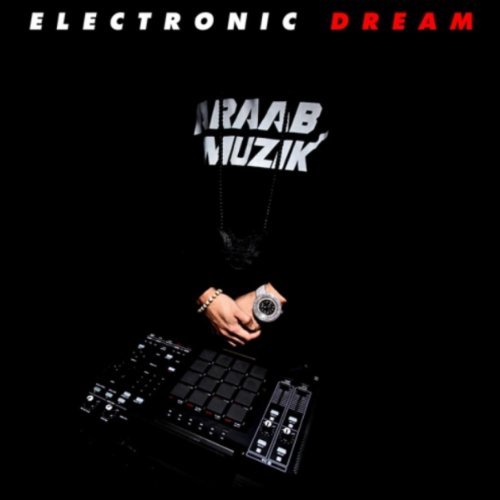
araabMUZIK in Vancouver


I’ve told a few friends that my favourite musical instrument is the drum machine, only to be faced with dumbfounded looks or even derision.  An artist like araabMUZIK, however, is exactly the kind to prove my point: one of the year’s most interesting figures, he’s slowly rising to prominence in the hip-hop world -- certainly beyond his original Dipset associations -- but has also become a sort of indie darling, though his aesthetic incites as much frothing rage amongst the musical elite as it does wagging praise.  His solo album Electronic Dream was an instant earworm and a consummately guilty pleasure, taking entire trance songs and demolishing them with his MPC drum machine -- it was cheap, way too easy, and way too fucking effective.
For me, anyway, Electronic Dream has managed to firmly stand its ground in the rushing dialogue of dance music, staying in rotation for months and months beyond so many of the year’s mostly highly-touted albums.  Something about the album’s rigid but springy rhythms and the spongey decadence of its sample material is irresistible, exciting, and thrilling: pure musical indulgence, so-wrong-it’s-right-kind-of thing.
Of course, it would be wrong to subtract araabMUZIK’s own considerable talent from the equation: even when dealing with other people’s material as on Electronic Dream, his ear pummeling hip-hop beats that nevertheless place as much emphasis on melody is rare in his world, and his emergence is well-timed, taking advantage of a mainstream rap scene obsessed with the shittiest of lowest common denominator music.  Electronic Dream is merely a way to take this obsession to the extreme, literalizing the hints at trance that so many prominent producers, rappers, and singer succumb to now.
Beyond just his own productions -- whether Electronic Dream, the super fun Dipset Trance Party mixtapes, or his beats for numerous rappers -- araabMUZIK also has an engaging live show, where he goes nuts on an MPC and runs wider than the scope of Electronic Dream.  Suffice it to say it needs to be seen to be appreciated, but below you’ll find an extended clip to get the gist of the kind of drum machine heroics he supplies.  I’m particularly excited for his show in Vancouver this weekend at the Electric Owl, where he’ll be joined and well-matched by Fool’s Gold associate Party Supplies, who has a similar mastery of the MPC but under a different umbrella than araabMUZIK’s cotton candy melodic tendencies.  Whatever your feelings on araabMUZIK, it’s worth a gander. I’ll be there.


Monday, November 14, 2011

Futureproofing Vancouver: Taal Mala


We've already had a great deal of talent featured on Futureproofing Vancouver, and a diverse breadth at that, but there's perhaps no better singular representative of the truly inspiring, fearless and diverse nature of Vancouver's electronic scene as one Taal Mala. A junglist at heart, his music has and does encompass pretty much every genre you could think of coursing throughout the hardcore continuum, from rave to jungle to techno to dnb to garage to grime to dubstep and a little house as well -- enough that you could mistake him for a UK producer that grew up on all that stuff in its natural habitat. His music is separated from the pack by a keen musicality missing from so many North American "dubstep" producers, an ear for melodies that are catchy and memorable without being simple or predictable, and an elastic flexibility borrowed from jungle that makes them eminently danceable to boot.

Friday, November 4, 2011

Futureproofing Vancouver: Monolithium


Maybe this one should be titled Futureproofing Victoria.  Monolithium, aka Longshanks, aka Chris Long, is perhaps the "head" in Victoria -- bawse-man of the city's prominent Subdiv crew, promoter extraordinaire, and one hell of a DJ to boot. He's arguably responsible for building one hell of a dedicated, knowledgeable and passionate scene in a relatively tiny city, one that might be said to rival anything Vancouver could offer.  He's part of this series not only because of Victoria's incredibly close proximity to Vancouver but because his impassioned and precocious efforts have had a mutually beneficial effect for making both cities hotspots in Western Canada for underground electronic music, and his endless support for local talent has helped to nurture the kind of overwhelming roster I'm presenting to you with this very series.

Monday, October 3, 2011

Salva's Weird Science

Mr. Paul Douglas and a cross for whatever reason

I've said a lot about Salva, whether it was in my deservedly glowing review of his debut album Complex Housing or in my RA Label of the Month feature on the label it was released on, Friends of Friends.  But I'll say it again: the former San Francisco scene kingpin (now based in L.A., the goddamned sellout) is one of the most inspiring and multi-talented producers going in a very crowded landscape of experimental California electronic music.  Part of is due to heritage: growing up on a diet of as much house as hip-hop, Paul Douglas' music doesn't have the same top-heavy swagger of so many of his Cali contemporaries, but instead a delicate and nimble sense of movement that makes his tumbling snare hits feel graceful instead of sloppy.  His own music, especially since Complex Housing, has been a melting pot of styles, whether he's just barely hinting at garage with tracks like "Keys Open Doors," squelchy future funk by way of "Beached" and "Wake Ups," lightfooted house on "I'll Be Your Friend," or a personal favourite, the serrated cotton candy fuzz of "Icey," which I called "the best Joker track never made" and I pretty much stand by that statement.  And I'm talking prime Joker there. [Read on after the jump for more babbling praise an exclusive mix]

Monday, September 26, 2011

Futureproofing Vancouver: Bartel


Thus far the Futureproofing Vancouver series has focused mostly around what I'd suppose you would call "dance music," but there's no shortage of interesting ambient, experimental, and whatever music in this city as well.  Whether it's the Quiet City nights put on by Panospria head Constantine Katsiris (aka Scant.Intone) or any number of shows and concerts put on at semi-legal venues in run-down parts of town, there's no shortage of either soothing ambience or noise in Vancouver.  Bartel doesn't really fit into either of those categories, though I guess if you had to pick one he slots more in the ambient section: making gorgeous tracks that are somewhat beat-oriented, Bartel's sound is marked by its warm, tactile textures and organic soundscapes.  Incorporating guitar and other "real world" sounds, and a deeply complicated bed of ambient sound, he finds a way to suffuse electronic music with a distinct and tangible humanity it can so often lack.


Thursday, September 22, 2011

Futureproofing Vancouver: Prison Garde + Eames


Though he's only been in Vancouver for two years, for me, Prison Garde is the epitome of the city's current inspiringly wide-open outlook on dance music.  He defines what Vancouver's club music should be like: witnessing one of his live sets -- particularly in the past year -- is to witness an hour plus of unfiltered, unleaded, unpretentious dance music: drums, bass, synths, all hitting the right places at exactly the right moments.  On the one hand it's almost simplistic, on the other hand it's bewilderingly genius.  He's produced as part of the outfit Megasoid and formerly as Sixtoo, with a long and storied history in his hometown of Montreal, but his material as Prison Garde might be his best yet.  With roots in hip-hop, his sound has been moving all over the place in the past year, and the free album he released just prior to this year's Bass Coast festival -- Systeme Hermes Vol. 1 (which I reviewed for FACT Magazine) -- is an excellent showcase for his diversification, spanning BPMs from 74 to 150.  House, hip-hop, dubstep, techno, whatever, you name it and it's probably swimming somewhere in the Prison Garde stream.   (He also runs the Catalog Gallery in Vancouver's Gastown neighbourhood.)

Then there's his recent partner in crime, Eames, aka Kevin Ehman.  Ehman as a DJ is maybe a bit more of a house head but shares the same appreciation for both hip-hop and a wide swathe of dance music.  A mainstay in Victoria's bustling scene (soon to be profiled via Victoria kingpin Chris Longshanks) for the past year, he recently relocated to Vancouver and has used the opportunity to maximize his collaborations with Squire, and the result is a wealth of tracks under the name Garde + Eames, subtle but devastatingly effective tracks that pull bits and pieces from each producer's musical personality and turn them into streamlined, purified slabs of silky seduction.

Monday, September 19, 2011

Futureproofing Vancouver: The Librarian


It might be an unusual pseudonym for a dubstep DJ, but trust me, this is one Librarian who's more than happy to let her hair down. (Sorry).  Based in the beautiful town of Squamish just north of Vancouver itself, Andrea Graham isn't your typical dubstep DJ either.  She calls her vision of dubstep "sexy, powerful, and spacious," and though I might be the "writer" here truth be told I'm having a hard time coming up with a better description. Her DJ sets are something to behold, building sensually and organically into a climax that's paradoxically as gentle as it is explosive.  There is something to be said for "spacious," and her selections have a tendency to bounce around and between the walls of a room as if feeling out the empty space: you need to hear her in a large fucking room to understand.  As focused on elegant melodies and clean lines as much as bassweight, hers is a sound that verges on polite (certainly pleasant) but isn't afraid to dip into the down-and-dirty at just the right time.  It's an enviable balance between the tear-out violence of so much modern North American dubstep and the kind of graceful 2step variations that have since sprouted, halfway between the UK and the West Coast and all the better for it.

Wednesday, September 14, 2011

Futureproofing Vancouver: Kuma

Name: Kuma (James Graham)
Hometown: Vancouver
Vancouverite since: "the age of three or four"
Associated labels: The Konspiracy Group, Immerse
Associated acts: Gunshae
Essential tunes: "Dawn Stepped Outside," "What It's Not," "The Blood Of Heroes (Kuma Remix)"


When we're talking about this whole "dubstep" / "post-dubstep" / "bass" / whatever shit in Vancouver, my mind always goes back to one figure: James Graham, better known in the city as Kuma and under any variations of the pseudonym involving bears.  Or "Captain of the Great Dubship." You get the idea. One of the very first musical connections I myself made while exploring the city, Kuma has been enlightening in outlining the recent history of the city's electronic music scene, partially because he played such a big hand in it himself.  This is the man who brought Kode9 to Vancouver to the infamous "Secret Location" all the way back in 2005, before most people in North America had ever heard of "dubstep.'  Though his role as a promoter has definitely receded in the past few years, he remains a persistent spectre haunting the Vancouver scene: you're likely to encounter the looming stature of his person at the city's best musical shows, he runs a label and collective called The Konspiracy Group, and is also deeply entrenched in the city's flourishing ambient scene as part of the duo Gunshae with Lady Eve.  He releases on his own TKG label -- the recent "What It's Not" single comes with a hearty recommendation from yours truly and also a Greivous Angel remix -- and he's also released on Bristol-based Immerse records, where he actually managed to rouse Horsepower from their hibernation in 2008 to remix his immense "Dawn Stepped Outside."  If that weren't enough, he does a radio show on Thursday nights called Art of Beatz, which has become an institution over the years and even hosted local writer Andrew Ryce (har har) for a year-end retrospective late last year.

Thursday, September 1, 2011

Futureproofing Vancouver: HxdB

I just recently did a profile on Warsaw label Concrete Cut, highlighting the label’s virtuosic versatility in the larger context of an underappreciated local scene with a vibrant cast of characters with as much to offer as any better-documented hub (London, Berlin, Los Angeles, et al).  Well, I like buried treasure -- a lot.  My hometown of Vancouver -- in British Columbia on the west coast of Canada, for those unfamiliar -- sits in a similar position to Warsaw, with a large, colourful and close-knit scene that could rival many of its better-known counterparts.  We can brag about having Kode9 play all the way back in 2005, and an early support system and love for dubstep -- ahead of much of the rest of the world -- has laid the groundwork for an exciting and deeply experimental dance music scene that mirrors London in the ongoing brilliant reinventions and incorporation of other genres (house, electro, juke) into what was once the dubstep template.  All of this is why I’ve decided to start a series of features on the best the city has to offer, featuring interviews and mini-mixes of original material, an aural snapshot of what each artist is about and a chance to see inside one of North America’s most inspiring electronic music hotspots.


Photo by Vasho Pekar


Name: HxdB
Hometown: Vancouver
Vancouverite since: a long time
Associated labels: Gradient Audio, Tectonic, Brownswood, Surefire Sound, Friends of Friends, Crude, Innovative Leisure, Aufect, 10Pin, Mindset, Formant, Palms Out, East Van Digital
Essential tunes: "Typewriter Tune VIP" (Surefire), "New Sense" (Crude), "Booyant" (Tectonic)


Thursday, August 11, 2011

Concrete Cut: Warsaw's Elegant Industry

Concrete Cut are a label that first came to my attention with their fourth release, from Sentel, a chiptuney chunk of UK-funky indebted strangeness that sounded like Ikonika on Mars.  It was a good enough release to warrant keeping eyes on the label, and since then they’ve released the gorgeous ambient/dub/garage experiments of ptr1, the post-rock drama of Shoju, the hollow drums of Tom Encore, and the Shackleton-indebted dread tones of Rhythm Baboon.  With releases (notably their debut) from Liquid Molly, they’ve even dipped their toes into the straight-up dubstep stakes (indeed, you can download a Concrete Cut allstars remix package of the first Liquid Molly remix for free).
So yeah, they’re a good label. So good, I’m willing to overlook the fact that they’re a digital-only label (give it time). But what is it that makes them stand out?  Well, they’re based in Warsaw, Poland.  All of those artists mentioned above are Polish. While it’s not as if Poland is some barren, unknown frontier, it’s not the first place any of us look for experimental and groundbreaking dance music -- and if you do, then kudos.  But there’s really no reason for such discrimination, and thankfully the internet is doing its job in knocking down geographical barriers.  Home to the well-respected Unsound Festival and an increasing number of prominent UK and German DJs, the Polish club seem appears as vibrant as ever, at least as much as someone who lives in Vancouver can see and understand.
Taking a survey of the label’s output so far, one begins to realize there’s a vibrant spectrum of music coming out of Berlin’s oft-ignored Eastern neighbour, a localized hub of talent that seems unfairly ignored despite the constant upwelling of talent in a manner that reminds me a lot of my hometown of Vancouver.  While there are some obvious moments of debt to UK originators, each producer puts their own idiosyncratic spin on these sounds -- personally I can’t recommend the work of Sentel or ptr1 more, and their releases on Concrete Cut are 2010 highlights. The overall impression of the label’s output is of a scene that’s arguably more experimental in sectors now ignored by those other, more visible local scenes: just check the way Sentel incorporate UK funky ideas into their music when UK funky arguably lies at its least influential back in its homeland.  It’s that mixture of incorporating trends and discarding the actual trendiness that makes Concrete Cut so inspiring: these artists just sound like they’re doing whatever they want, and they do it consummately well.  Concrete Cut might be a digital-only label relatively green behind the ears, but it suffers from none of (what I call) the SoundCloud syndrome of shitty drums, cheesy pads and bad vocal samples. 
Because I was intrigued by the label’s obviously hefty store of talent, and wanted to learn more about this burgeoning Polish scene (there admittedly isn’t a lot of (English) writing about it on the internet that isn’t by yours truly), I got in touch with label head Dana Dramowicz for an in-depth interview discussing the label and the scene in Warsaw and larger Poland.  If that wasn’t enough, Dramowicz has provided Futureproofing with an exclusive all-Polish mix spanning music both signed to Concrete Cut and other labels, and it’s one hell of a ride showcasing not only the unpredictable grab-bag that is the Polish beat scene but the uniformly high production values and execution.  It doesn’t sound like the work of a bunch of relative unknowns, and with any luck, the lot of them won’t be relative unknowns for much longer.

Thursday, July 7, 2011

Tuesday, May 10, 2011

Deep, Heavy, Soulful: Bristol's Andy Mac

Late last year, this humble little blog debuted with a not-so-humble barnstormer of a mix from Punch Drunk label head Peverelist.  Aside from a boatload of promising new material from Mr. Tom Ford himself, the mix included two other prominent debuts: Kahn's "Like We Used To" and Andy Mac's "Everytime."  In February, Kahn's track was released on the label to great acclaim, a perfect and poppy synthesis of dubstep, garage, and house.  Well, the next Punch Drunk release was the other debut from the mix's other standout, Andy Mac's "Everytime," two slices of dusty garage-inflected house striking the perfect balance between propulsive and catchy and doing it all with a rather on-point sense of age and crackle. I reviewed the single over at FACT, and Andy Mac's subtle and slightly dark tunes remind me a lot of what I love about another one of 2011's brightest new prospects, Kevin McPhee.


But really, who the hell is Andy Mac?  I had certainly never heard of him; I contacted Peverelist to find out more and it turns out he's a DJ ("first and foremost"as Ford puts it).  So who better to to do a Futureproofing post on than a producer with such high potential?  Liking his single so much, and wanting to hear how he would contextualize his sound in a DJ mix, I tapped Andy Mac for a mix and a short interview, and I'm glad I did.  Mac's mix is pretty much exactly what you could expect if you've heard his debut 12-inch, and if you have, then this is worth your time and then some.  Over the course of 90 minutes Mac feels out every tangent and influence that you could possibly pick out of his music: deep, jacking house, garage-leaning tracks, swift and smooth techno, spacey dub, and everything in between.  He doesn't provide a tracklist, but that's just all part of the fun: there are of course familiar tracks, but it's impressive how he manages to make everything sound both timeless and curiously, mysteriously aged, like some old mix unearthed from a decade and a half ago.  Interview and download after the jump.